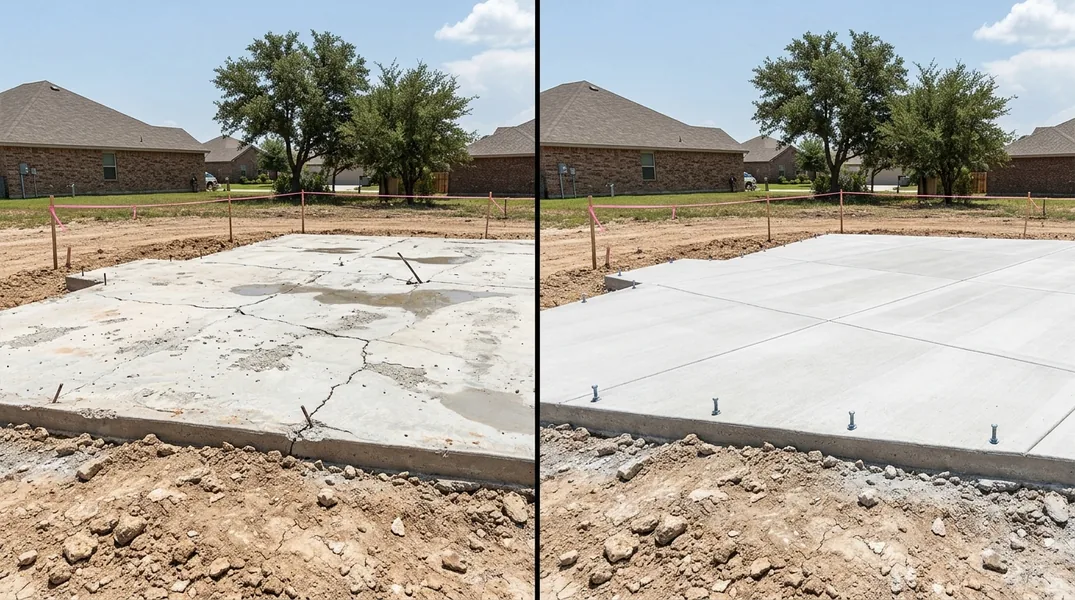
Understanding New Construction Concrete Slabs in Killeen
Purchasing a new home in Killeen is an exciting milestone, but it comes with serious responsibilities. One of the most critical components of any new build is the concrete foundation slab, yet many homebuyers overlook this crucial element during their final walkthrough. A concrete slab serves as the literal foundation of your home, supporting walls, flooring, and everything inside. Unlike older homes with basements or crawl spaces, most new construction in Killeen relies on a concrete slab-on-grade foundation, making it essential to understand what you're buying before you sign the closing papers.
The Texas climate, with its heat, humidity, and occasional freeze-thaw cycles, puts particular stress on concrete foundations. A slab that appears solid during a quick walkthrough may develop problems months or years after you move in if it wasn't properly installed, cured, or maintained during construction. Builders have financial incentives to move quickly through projects, which sometimes means corners get cut on foundation preparation and quality control. As a homebuyer, your job is to protect your investment by knowing what to look for and what questions to ask before closing day arrives.
What to Inspect Before Closing on Your New Build
A thorough builder foundation inspection should happen before you close on your new home. Walk the entire perimeter of the slab, both inside and outside, looking for visible cracks, uneven surfaces, or areas where the slab has settled unevenly. Small hairline cracks are often normal in concrete as it cures, but wider cracks (typically wider than 1/8 inch) or cracks that follow a pattern warrant closer attention and a professional assessment. Check for areas where water might pool around the foundation, as poor drainage can lead to moisture problems inside your home and accelerate concrete deterioration.
Inside the home, look at how the slab meets the walls and check for gaps, cracks, or signs of movement. Pay special attention to areas around doorways, windows, and corners, where stress concentrates. If you notice the flooring feels uneven or doors don't close smoothly, this could indicate a slab settlement issue. Don't hesitate to hire an independent structural engineer or foundation inspector to evaluate the slab before closing. The cost of a professional inspection (typically $300 to $600) is minimal compared to the potential expense of repairing a defective foundation after you own the home. Most builders will allow this inspection as a condition of sale, and their cooperation or resistance can tell you a lot about the quality of their work.
New Home Foundation Warranty: What's Actually Covered
Understanding your new home foundation warranty is critical because not all warranties are created equal. Most builders offer a one-year structural warranty covering major defects, but the specifics vary widely. A new home foundation warranty typically covers structural failures that affect the habitability of the home, such as major cracks that compromise the slab's integrity or settlement that makes the home unsafe. However, many warranties explicitly exclude cosmetic cracks, minor settlement, or damage caused by environmental factors like drought or flooding. Read your warranty documentation carefully and ask your builder's representative to explain exactly what is and isn't covered before you close.
The key limitation in most builder warranties is that they're only as good as the builder's financial stability and willingness to honor them. If a builder goes out of business or disputes your claim, you may find your warranty protection worthless. Some builders purchase third-party warranty insurance to back up their coverage, which provides additional protection. Ask whether your builder carries this type of insurance and request documentation. Additionally, many warranties require you to report issues within a specific timeframe (often 12 months) and may have caps on the amount the builder will spend on repairs. Understanding these limitations before closing helps you decide whether to negotiate additional protections or request the builder address any concerns before you take ownership.
Common Concrete Slab Problems in Texas New Builds
Texas weather creates unique challenges for concrete foundations. The extreme heat causes concrete to expand, while the occasional freeze can cause it to contract. Over time, this cycling can lead to cracking and surface spalling (where the top layer of concrete flakes away). Expansive clay soils, common throughout central Texas, can shift and push against the slab, causing it to heave or settle unevenly. If your new build sits on clay soil and hasn't been properly prepared with adequate drainage and soil stabilization, you're at higher risk for foundation problems down the road.
Another common issue is poor site drainage during construction. If the builder doesn't properly slope the soil away from the foundation or fails to install adequate drainage systems, water can pool against the slab. This moisture can seep into the concrete, causing it to deteriorate faster and potentially leading to mold or moisture problems inside your home. Additionally, if the concrete wasn't properly cured during construction (curing is the process where concrete hardens and gains strength over time), it may be weaker than it should be and more prone to cracking and damage. These aren't always immediately visible problems, which is why professional inspection before closing is so valuable.
Post-Closing: Protecting Your Concrete Slab Investment
Once you close on your new home, you become responsible for maintaining the concrete slab. Proper maintenance can extend the life of your foundation and prevent minor issues from becoming major expenses. Keep gutters and downspouts clean and ensure they direct water at least six feet away from the foundation. During dry periods, which are common in Texas, monitor the soil around your foundation and water it if it becomes extremely dry, as this can cause the slab to settle unevenly. If you notice new cracks or signs of movement, address them promptly rather than waiting to see if they get worse.
For cracks or surface damage that develops after you've moved in, Concrete Repair & Resurfacing services can often restore your slab and prevent further deterioration. Small cracks can be sealed to prevent water infiltration, and surface damage can be resurfaced to restore the concrete's appearance and functionality. If you're planning any outdoor improvements like adding Concrete Driveways or Concrete Patios, work with experienced contractors who understand local soil and climate conditions. Killeen Concrete has extensive experience with new construction properties and can help you maintain and upgrade your concrete surfaces properly. If you have concerns about your foundation or need professional assessment, contact us at (254) 382-3006 or request a free estimate.
Taking Action: Your Closing Checklist
Before you close on your new build in Killeen, create a comprehensive checklist specifically for the concrete slab and foundation. Schedule an independent foundation inspection at least one week before closing, giving you time to address any findings with the builder. Request a detailed copy of the builder's foundation warranty and have your real estate attorney review it. Walk the property during different times of day and in different weather conditions if possible, as problems may be more visible when the sun is at certain angles or after rain. Take photographs and videos of the entire slab, both inside and out, for your records.
Don't assume that because a home is new, the foundation is automatically in perfect condition. New construction defects happen regularly, and builders count on many homebuyers being too trusting or too busy to conduct thorough inspections. Your diligence before closing can save you tens of thousands of dollars in foundation repairs down the road. If you discover any concerns during your inspection, address them before closing rather than hoping to resolve them afterward. The builder has more leverage to fix problems before you own the home, and you have more recourse if issues develop shortly after purchase. For professional guidance on evaluating your new home's concrete foundation or for any concrete services after you move in, Killeen Concrete is ready to help. Call us today at (254) 382-3006 to discuss your new construction property.
Looking for a professional concrete contractor in Killeen? Killeen Concrete responds fast for all your concrete needs.
Get a Free QuoteOur services: Concrete Driveways · Concrete Patios · Stamped & Decorative Concrete