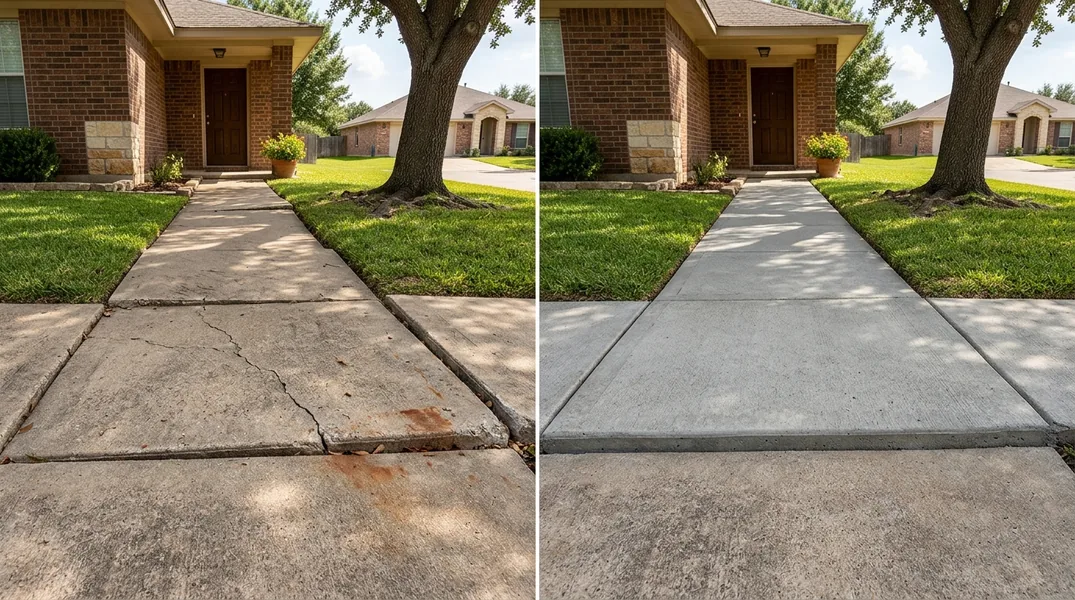
Understanding Killeen's Unique Soil Challenge
If you own a home in Killeen, you've likely noticed that concrete doesn't behave the same way it does in other parts of Texas. The reason isn't poor installation or cheap materials. It's the ground beneath your feet. Killeen sits on a geological foundation that's particularly hostile to concrete slabs: a combination of rocky clay over limestone caliche soil.
This soil composition creates a perfect storm for concrete problems. The upper layer of clay is highly expansive, meaning it swells dramatically when wet and shrinks when dry. Below that sits a dense layer of limestone caliche, which is essentially compacted limestone fragments bonded together. This two-layer system doesn't provide the stable, uniform foundation that concrete needs to remain crack-free and level. Instead, homeowners across Killeen experience foundation movement, settling, and the telltale cracks that plague driveways, patios, and slabs throughout the region.
How Clay Soil Concrete Cracking Happens
Clay soil is deceptive. It looks solid and stable, but its behavior changes dramatically with moisture. When it rains, clay absorbs water like a sponge and expands upward. This expansion can lift and shift concrete slabs by several inches over time. Conversely, during dry spells and hot Texas summers, that same clay shrinks, creating voids beneath the slab. The concrete, which is rigid and inflexible, can't move with the soil. Instead, it cracks.
The cycle repeats year after year. Wet season expansion, dry season contraction, wet season expansion again. Each cycle stresses the concrete more. Small hairline cracks widen into visible fractures. Sections of the slab begin to settle unevenly, creating trip hazards and that sunken appearance that screams neglect. What started as microscopic movement becomes visible damage that affects both the safety and curb appeal of your home. This is why clay soil concrete cracking is so common in central Texas and why so many homeowners find themselves searching for Concrete Repair & Resurfacing solutions.
The Limestone Caliche Problem Beneath the Surface
Below the clay sits limestone caliche soil, a layer that presents its own set of challenges. Caliche is dense, impermeable, and doesn't provide good drainage. Water that would normally percolate down through soil instead pools above the caliche layer, saturating the clay above it. This prolonged moisture exposure accelerates the expansion and contraction cycle, making the problem worse. Additionally, caliche is uneven and inconsistent. It has soft spots, hard spots, and gaps. A concrete slab poured over this inconsistent base won't settle uniformly. Some areas may sink while others remain level, creating the differential settling that causes cracking and buckling.
The limestone caliche soil issue is particularly problematic because it's invisible. A homeowner might hire a contractor who doesn't account for caliche depth or characteristics, leading to inadequate site preparation. The concrete might look fine for the first year or two, but as moisture dynamics play out beneath the surface, problems emerge. This is why proper site assessment and preparation are critical before pouring any concrete in the Killeen area.
Drought, Soil Movement, and Your Concrete
Texas droughts are intense and unpredictable. During extended dry periods, clay soil shrinks dramatically, pulling away from the edges of concrete slabs and creating voids underneath. This void means the slab loses support and can crack under its own weight or the weight of a vehicle. When drought finally breaks and rain returns, the clay re-expands, but by then the damage is often done. The slab may have already cracked, settled, or shifted. Worse, the repeated drought-flood cycle accelerates deterioration. A concrete driveway that might last 25 to 30 years in a stable climate can show serious wear in 10 to 15 years in Killeen.
Soil movement caused by drought and moisture fluctuation is relentless. You can't stop the weather, but you can build concrete systems designed to handle it. This means proper grading to direct water away from slabs, adequate base preparation, and sometimes the use of reinforcement or stabilization techniques. It also means understanding that some cracking may be inevitable in this climate, but professional installation and maintenance can minimize the damage and extend the life of your concrete investment significantly.
Why Concrete Driveways Need Special Attention in Killeen
Your driveway takes a beating. It supports the weight of vehicles, endures direct sun exposure, and sits directly on the problematic soil we've discussed. In Killeen, all these factors combine to create an especially harsh environment for concrete. A driveway that performs adequately in other regions may fail quickly here. This is why choosing a contractor with local experience matters tremendously. They understand the soil, the climate, and the specific challenges that Killeen's geology presents.
Proper driveway construction in this area requires thicker concrete, better drainage, and often a more robust base preparation than standard practices. Some contractors use a gravel or recycled asphalt base to improve drainage and reduce the direct contact between clay soil and the concrete. Others may recommend reinforcement with rebar or wire mesh to help the concrete resist the stresses caused by soil movement. The upfront investment in these measures pays dividends in durability and reduced need for Concrete Repair & Resurfacing down the road.
Prevention and Professional Solutions Near Me
The best time to address Killeen's soil challenges is before concrete is poured. A professional site evaluation can identify soil conditions, assess drainage, and recommend appropriate construction methods. This might include soil stabilization, improved base layers, or modified concrete mixes designed to resist cracking in expansive soil conditions. While these measures add to the initial pricing, they're far less expensive than major repairs or replacement later.
If you already have cracked or damaged concrete, professional Concrete Repair & Resurfacing can extend the life of your existing slabs. Techniques range from simple crack sealing to slab jacking, which lifts settled concrete back to level. For severely damaged driveways or those showing signs of ongoing soil movement, replacement may be the best long-term solution. Whatever your situation, the team at Killeen Concrete understands the local soil conditions and can recommend the right approach for your property. Call us at (254) 382-3006 or request a free estimate to discuss your concrete needs today.
Looking for a professional concrete contractor in Killeen? Killeen Concrete responds fast for all your concrete needs.
Get a Free QuoteOur services: Concrete Driveways · Concrete Patios · Stamped & Decorative Concrete